
Five Ways I'm Rethinking Finance in 2026
At the end of 2025, I was listening to the Get Rich Podcast podcast from the Lady Finance Club about empowering women to understand and implement financial strategy and goals. I'm not a regular listener, but the topic of how to control over shopping really it caught me. Through the pandemic, I experienced significant career growth and that came with a just as significant jump in my salary and in lockdown online shopping became a new pastime.
Then time off work with burnout, I found myself repeating those same habits, and I realised how looking online for things became something I used to distract myself.
After listening to this episode I calculated how much I had spent on clothes (and stuff in general) in 2025, and I was shocked. The number was double what I had told myself it was. I think online shopping wasn't the problem so much as my perception of what my behaviour was, so I decided I had no choice but to implement my own no-clothes year just like the guest Emma Edwards on this podcast episode did.
But in 2026, financial empowerment is so much bigger than buying no clothes. It's about ensuring how I'm using my income is aligned to my personal goals, aspirations, and values. And that's so much different than what it was back in 2020.
Before you get into my five approaches to managing the moolah (money) habits, I want to confirm this is not financial advice or education. It's five shifts I'm taking to reclaim my money agency and ways to consider making shifts for yourself too. For financial advice, please see a professional.
No new clothes year

I love expressing myself through the things I wear. I love colour, I love seasons, and I love having different looks that make me feel confident and bright. However, my love of expression through clothing has led to a beautiful wardrobe of things where honestly, if you look at the cost per wear, then it's a very expensive item.
So this year, it's all about embracing this wardrobe and bringing down the cost per wear to something under $1. I cleared out old items, and going through that, I found a love for other items that I haven't worn in years. So instead of looking online for something new, I'm choosing to wear something new each week from my already-established wardrobe
I want to add I've allowed myself to replace any of the necessities, but overall, no new things this year.
Documenting every dollar
This one is tedious but essential for me to monitor my spending habits and to see trends in how I use my money (and cards). At the end of last year, I added up my expenditure and then categorised them into the essentials of life versus the other things I bought for hobbies or clothing or health, and the numbers showed me that I spent way more on things that I thought I had control or moderation over. I plan every month to have a money date (with some delicious food) to put all the spending on a spreadsheet, to see the trends and what shifts I'd like to make for the following month.
A little accountability is so powerful. And the numbers don't lie. By looking at the details from 2025, I can already see where I can fund my European holiday this year. I've also seen some money leaks on little food purchases here and there or subscriptions I no longer use, which I'd much rather go towards a meal out with family or friends. More importantly, ensure that there's alignment between how I'm spending to live life well but also ensure I can meet my goals and not be to the detriment of them.
Food prepping
This one started two years ago when I began to work with a naturopath, and post-burnout, my body felt all over the place. I had to learn how to eat well not just for my health goals but also to ensure I was providing my body with the nutrients to support it to work as optimally as possible in stressful professional environments.
When I was younger, I was never interested in learning how to cook, but after travelling the world, eating local meals became one of my favourite things to do. And then the Instagram algorithm came along, and now I get delicious recipes thrown at me all day long.
I've learnt that planning what to eat and having that prepped provides a number of wins. First, it stops Uber Eats coming straight to my door, but I also can plan that I'm getting the nutrients I need with the deliciousness of variety and it supports having a stable budget.
One thing I did was get an old-school fill-it-yourself recipe book, and when I find a recipe I like, I add it in. I can see how many meals, macros if that's your thing, but overall it helps cooking not get boring while also maintaining lots of yummy homemade options. It also helps me form a shopping list, so I know what I need and stick to it at the shops rather than all the ad hoc purchases on the fly.
I also want to say I've written a list of all the things that I want to purchase. Getting that out of my head and onto paper alleviates the pull to purchase on the spot and once again makes for more conscious purchases in time.
Find your tribe
Accountability and sharing goals and experiences with others is a very powerful tool for motivation and realising any goal you may have. This is especially true when trying to alter or change a behaviour. In 2026, many of my friends are sharing the goal of financial empowerment and opportunity, and I was lucky to bump into some friends at the beach who shared this was part of their New Year plan too. I couldn't believe the serendipitous nature of this, and now I have a tribe sharing this goal, sharing actions, reading resources, and feeling supported and believed in one step at a time.
Low-key social experiences
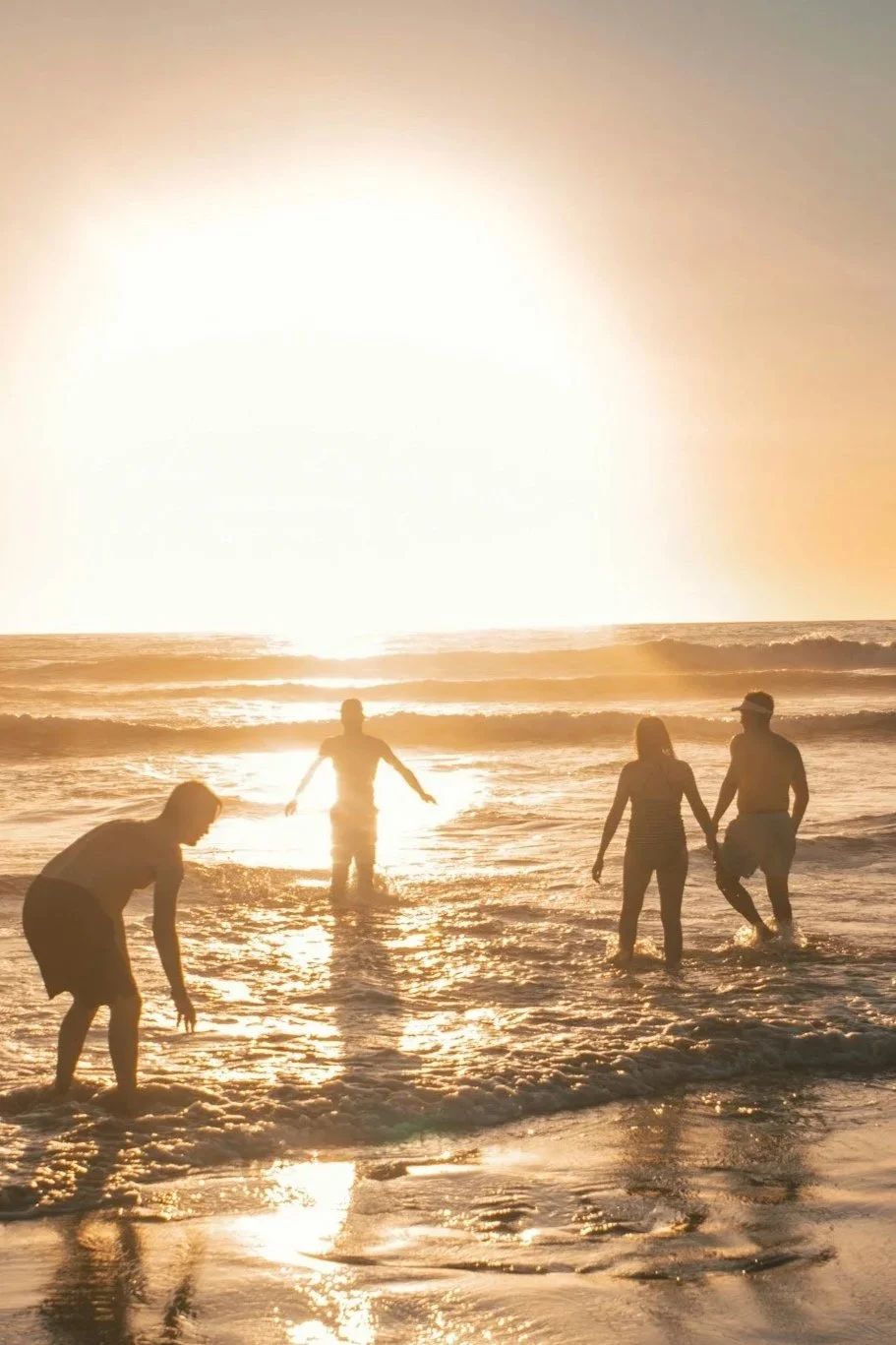
I believe that having social experiences and a sense of community is a critical part of life for our health and wellbeing. Participating in social activities can be so expensive. This year, I've committed to enjoying more activities in my week that connect me to others without the need to spend large amounts of money.
Make it In my free time, I like to surf or go diving or play tennis. I've also found a community sport that is very cheap. I also have regular walks or swims with friends along the beach.
None of these cost a lot of money, but what they do is provide me with lots of opportunity to be out and about without the need to spend loads.
So it's the end of January—how am I tracking?
So far, we're four weeks into the new year, and I'm already noticing a shift and immediate short-term progress that has essentially come from the tracking of spending while also learning about my habits and trends in real time. I have moments when my mind goes, "I have no clothes," or desperately wants to look at my favourite store website. I'm also going through a wave of "if I can't spend it on clothes, can I spend it on homewares?" But each thought has been met with a deeper thought of scrutiny if that is something I wish to do or not.
That is the blessing.
And one surprising thing is rather than distracting myself online looking at something that will go straight into the wardrobe, never to be looked at again (I'm not that bad), I'm realising I have to find a new outlet for those moments that I used online shopping as a distraction.
Instead, I write my frustrations in a diary, exercise, or pivot into a creative outlet.
Finding a way to process without the added expenditure.
So with that, I'll check in next month with an update.